Blog Archive

Search This Blog

Tuesday, December 18, 2018

The course of double mandibular canal - confront to dentist p. 133 Jayasheela Mallappa, Neeharika Sree, B H Dhanya Kumar, Dhoom Singh Mehta DOI:10.4103/ijohs.ijohs_40_18 The mandibular canal is usually a single canal that begins with mandibular foramen on the medial surface of the ascending mandibular ramus. It transmits the inferior alveolar artery, vein, and the inferior alveolar nerve. The identification of the mandibular canal and its anatomic variations is of great importance in many branches of dentistry, especially in implant dentistry. Sometimes, there may be variations in the normal anatomic structures; one of the rarest among them is double mandibular canal. The clinician should be aware of such variations to avoid complications during the treatment. In the present case report, we have discussed about a case with double mandibular canal and the complications that can arise during the treatment.


The course of double mandibular canal - confront to dentist p. 133
Jayasheela Mallappa, Neeharika Sree, B H Dhanya Kumar, Dhoom Singh Mehta
DOI:10.4103/ijohs.ijohs_40_18  
The mandibular canal is usually a single canal that begins with mandibular foramen on the medial surface of the ascending mandibular ramus. It transmits the inferior alveolar artery, vein, and the inferior alveolar nerve. The identification of the mandibular canal and its anatomic variations is of great importance in many branches of dentistry, especially in implant dentistry. Sometimes, there may be variations in the normal anatomic structures; one of the rarest among them is double mandibular canal. The clinician should be aware of such variations to avoid complications during the treatment. In the present case report, we have discussed about a case with double mandibular canal and the complications that can arise during the treatment.
http://www.ijohsjournal.org/currentissue.asp?sabs=y

Actinomycotic infection of the tonsils: A case report and review of the literature p. 129 Stavanger Singh Bakshi, Ramiya Ramachandran Kaipuzha, Suriyanarayanan Gopalakrishnan, A Govindarajan DOI:10.4103/ijohs.ijohs_43_17 Actinomycotic infections of the head and neck, although fairly uncommon, represent an important entity because of its varied presentation, difficult diagnosis, and long course of treatment. A 20-year-old female presented with throat pain and difficulty in swallowing for 1 year. Examination revealed a Grade IV enlargement of the left tonsil. The patient underwent tonsillectomy, and the postoperative histopathology revealed actinomycosis. Actinomyces is anaerobic filamentous bacteria which are known to colonize as commensals in tonsillar crypts which on histology show an outer zone of granulation tissue and a central zone of necrosis containing many sulfur granules that represent microcolonies of Actinomyces. Actinomycosis of the head-and-neck region is a significant


G.Actinomycotic infection of the tonsils: A case report and review of the literature p. 129
Stavanger Singh Bakshi, Ramiya Ramachandran Kaipuzha, Suriyanarayanan Gopalakrishnan, A Govindarajan
DOI:10.4103/ijohs.ijohs_43_17  
Actinomycotic infections of the head and neck, although fairly uncommon, represent an important entity because of its varied presentation, difficult diagnosis, and long course of treatment. A 20-year-old female presented with throat pain and difficulty in swallowing for 1 year. Examination revealed a Grade IV enlargement of the left tonsil. The patient underwent tonsillectomy, and the postoperative histopathology revealed actinomycosis. Actinomyces is anaerobic filamentous bacteria which are known to colonize as commensals in tonsillar crypts which on histology show an outer zone of granulation tissue and a central zone of necrosis containing many sulfur granules that represent microcolonies of Actinomyces. Actinomycosis of the head-and-neck region is a significant entity because it can mimic other common lesions, especially in the oropharynx. In cases of recurrent tonsillitis and tonsillar hypertrophy, tonsillectomy is the treatment of choice, and histopathological examination of resected tissue is strongly advocated. This report supports the view that Actinomyces may have a causal association with recurrent acute tonsillitis and tonsillar hypertrophy.
http://www.ijohsjournal.org/currentissue.asp?sabs=y

Hemorrhagic bulla on the lip: A diagnostic dilemma p. 124 Aravinda Konidena, Hena Shaw, Mansimran Kaur Uppal DOI:10.4103/ijohs.ijohs_17_18 Angina bullosa hemorrhagica (ABH) is a rare benign disorder characterized by the sudden onset of painless blood-filled blister in the oral cavity that rupture in 24–48 h. We recently encountered an interesting case of ABHon the lower lip of 68-year-old female patient referred back from the prosthodontic department following the procedure of impression making. This case will be presented along with a review of previous case summaries reporting four or more cases.


Hemorrhagic bulla on the lip: A diagnostic dilemma p. 124
Aravinda Konidena, Hena Shaw, Mansimran Kaur Uppal
DOI:10.4103/ijohs.ijohs_17_18  
Angina bullosa hemorrhagica (ABH) is a rare benign disorder characterized by the sudden onset of painless blood-filled blister in the oral cavity that rupture in 24–48 h. We recently encountered an interesting case of ABHon the lower lip of 68-year-old female patient referred back from the prosthodontic department following the procedure of impression making. This case will be presented along with a review of previous case summaries reporting four or more cases.
http://www.ijohsjournal.org/currentissue.asp?sabs=y

unusual presentation of mucoepidermoid carcinoma with review of literature p. 120 Gadadasu Swathi, Tatapudi Ramesh, Moturi Kishore, Govind Raj N Kumar DOI:10.4103/ijohs.ijohs_24_18 Head-and-neck cancers constitute about 30% of cancers in India, of which salivary gland tumor such as mucoepidermoid carcinoma (MEC) was the most common malignant salivary gland tumor. The parotid gland was the most common site of origin in both benign and malignant tumors, followed by submandibular and sublingual glands. Salivary gland tumors comprise a morphologically diverse group of rare tumors. Their multifaceted clinical presentation, varied morphologic configuration, and relatively unpredictable prognosis attract significant medical interest. Here is a rare case report of an asymptomatic swelling in the cheek region which was thought to be pleomorphic adenoma at the outset which on further investigations proved as MEC of early detection.


unusual presentation of mucoepidermoid carcinoma with review of literature p. 120
Gadadasu Swathi, Tatapudi Ramesh, Moturi Kishore, Govind Raj N Kumar
DOI:10.4103/ijohs.ijohs_24_18  
Head-and-neck cancers constitute about 30% of cancers in India, of which salivary gland tumor such as mucoepidermoid carcinoma (MEC) was the most common malignant salivary gland tumor. The parotid gland was the most common site of origin in both benign and malignant tumors, followed by submandibular and sublingual glands. Salivary gland tumors comprise a morphologically diverse group of rare tumors. Their multifaceted clinical presentation, varied morphologic configuration, and relatively unpredictable prognosis attract significant medical interest. Here is a rare case report of an asymptomatic swelling in the cheek region which was thought to be pleomorphic adenoma at the outset which on further investigations proved as MEC of early detection.
http://www.ijohsjournal.org/currentissue.asp?sabs=y

Colonic phenotype of adenocarcinoma base of the tongue: An entity rarely reported and treated with definitive chemoradiation p. 116 Neelam Sharma, Abhishek Purkayastha, Chhavi Arora, Kavita Sahai DOI:10.4103/ijohs.ijohs_55_17 The predominant histological type of oropharyngeal cancer is squamous cell carcinoma and approximately 9 times more frequent when compared with other types. Adenocarcinoma common histopathology for digestive system is very rarely reported in this region. In literature, there are limited data about the clinical presentation, histopathology, and treatment modalities for the primary adenocarcinoma of the base of the tongue (BOT). To the best of our knowledge, five cases of adenocarcinoma of the BOT with colonic differentiation have been reported in the world literature till date, and this is the first case report from India. The challenge in these type of cases is to differentiate between the primary adenocarcinoma of BOT which is extremely rare, metastatic lesio


Colonic phenotype of adenocarcinoma base of the tongue: An entity rarely reported and treated with definitive chemoradiation p. 116
Neelam Sharma, Abhishek Purkayastha, Chhavi Arora, Kavita Sahai
DOI:10.4103/ijohs.ijohs_55_17  
The predominant histological type of oropharyngeal cancer is squamous cell carcinoma and approximately 9 times more frequent when compared with other types. Adenocarcinoma common histopathology for digestive system is very rarely reported in this region. In literature, there are limited data about the clinical presentation, histopathology, and treatment modalities for the primary adenocarcinoma of the base of the tongue (BOT). To the best of our knowledge, five cases of adenocarcinoma of the BOT with colonic differentiation have been reported in the world literature till date, and this is the first case report from India. The challenge in these type of cases is to differentiate between the primary adenocarcinoma of BOT which is extremely rare, metastatic lesion to this site from any other site, or its origin from minor salivary glands which is a more common possibility because all these situations have different treatment implications.
http://www.ijohsjournal.org/currentissue.asp?sabs=y
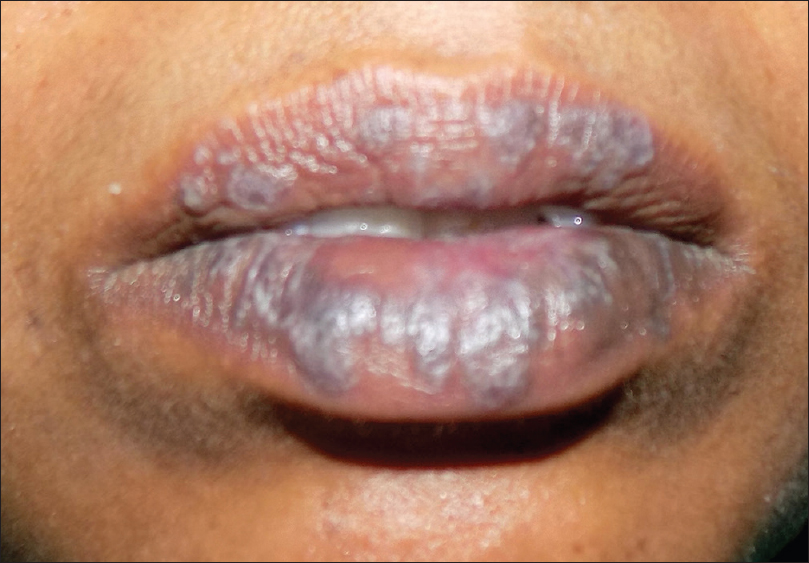
Multivariant lichen planus of lips and gingiva: Report of a case and a review p. 109 SM Rekha, Apeksha Basawant Annigeri, Sushama R Galgali, P Jagadish DOI:10.4103/ijohs.ijohs_18_18 Oral lichen planus (OLP) is a relatively common inflammatory mucocutaneous disorder that frequently involves the oral mucosa. There are many etiological factors, and some among them are stress, diabetes mellitus, and hypothyroidism. An important complication of OLP is the development of oral squamous cell carcinoma, which led the World Health Organization to classify OLP as a potentially malignant disorder. This article reports a multivariant (reticular, erosive, and papular) case of lichen planus that has affected a 40-year-old medically compromised female who was managed successfully and still under follow-up.


Management of flabby ridge case: An arduous task in undergraduate practice p. 104 Jnanashree Chiplunkar, Masrie Tumbil, MD Chethan, DB Nandeeshwar, Disha Patel DOI:10.4103/ijohs.ijohs_41_18 A fibrous or flabby ridge is a superficial area of mobile soft tissue affecting the maxillary or mandibular alveolar ridges. It can develop when hyperplastic soft tissue replaces the alveolar bone and is a common finding particularly in the upper anterior region of long-term denture wearers. Masticatory forces can displace this mobile denture-bearing tissue, leading to altered denture positioning and loss of peripheral seal. Unless managed appropriately, such “flabby ridges” adversely affect the support, retention, and stability of complete dentures. Many impression techniques have been proposed to help overcome this difficulty. This paper presents case report for prosthodontic rehabilitation of a patient with flabby ridge with McCord and Ahmad impression technique.


Blog Archive

Pages

   International Journal of Environmental Research and Public Health IJERPH, Vol. 17, Pages 6976: Overcoming Barriers to Agriculture Green T...